
Cooked Olive Oil is Slowly Decaying Your Body
Discover why olive oil turns harmful when overheated and why coconut oil is a safer, stable choice for high-heat cooking and better health.


The Dangers of Cooking with Olive Oil at High Heat:
Many of us drizzle olive oil on salads or use it for light sautéing because it’s heart-healthy and flavorful. But turn up the heat too high, and that same healthy olive oil can turn against you. When olive oil is exposed to high cooking temperatures (especially past its smoke point around ~190°C), it starts to break down. In this post, we’ll explore why olive oil + high heat = harmful compounds, and how to make a simple, healthy swap in your cooking.
Olive Oil: Heart-Healthy When Raw, Risky When Overheated
Olive oil is packed with beneficial monounsaturated fats and antioxidants when used raw or at low heat. However, if you use olive oil for high-heat cooking (like frying or searing), it can degrade and form unhealthy byproducts. At high temperatures, the fat molecules in olive oil oxidize (react with oxygen) and can release free radicals. Free radicals are unstable molecules that can damage your cells and DNA, leading to oxidative stress and inflammation.
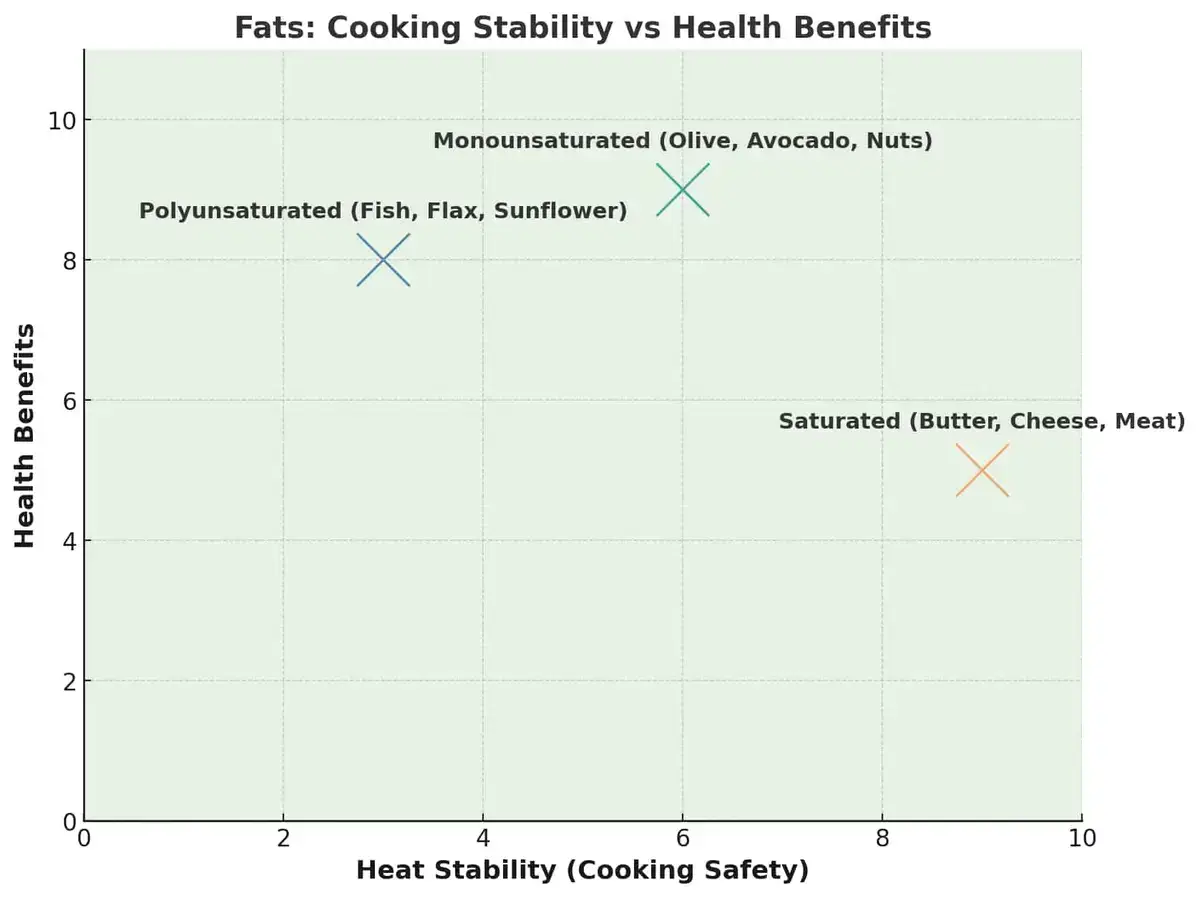
Graph showing the health benefits of oils.
Even more alarming, very high heat can cause some of the oil’s unsaturated fats to transform into trans fats. Trans fats are well-known bad actors linked to heart disease and other health problems. So by overheating olive oil, you may be creating free radicals and trace trans fats in your pan, exactly the kinds of compounds you’re trying to avoid.
Overheating olive oil also means losing what’s good about it. The heart-healthy antioxidants (like vitamin E and polyphenols) that make olive oil so nutritious burn off under high heat, reducing its health benefits. In short, cooking olive oil too hot flips its profile from protective to potentially harmful. Instead of fighting inflammation and supporting heart health, overheated olive oil can contribute to inflammation and oxidative stress in your body.
Coconut Oil: A Heat-Stable Alternative for Cooking
So, what’s a health-conscious cook to do? One great option is coconut oil. Coconut oil is rich in saturated fats, which makes it much more stable under high heat. Unlike the looser, unstable polyunsaturated fats, saturated fats have tightly packed molecules that don’t break apart easily when heated. This means coconut oil can handle the heat of frying or roasting without producing a barrage of free radicals causing havoc!
Using coconut oil for high-heat cooking lets you avoid those harmful breakdown products that olive oil would create at the same temperature. Coconut oil has a relatively high smoke point and remains chemically stable, so it won’t form trans fats or other toxic compounds nearly as readily. In practical terms, that means you keep your food (and your body) free from the oxidized bits and toxins that come from overheated oils. Plus, you’ll still get the benefits of a healthy fat for cooking, just one that’s better suited for the job.
Restaurant Oils: The Hidden Risk in Fried Foods
Many restaurant and fast-food kitchens use cheap vegetable oils (like soybean, corn, or canola oil) for deep-frying and high-heat cooking. These oils are usually high in polyunsaturated fats, which are unstable at high heat, so they can produce higher levels of free radicals when heated. That’s bad news for our health.
The problem gets worse: restaurants often reuse the same oil over and over for frying. Each time oil is reheated and reused, toxic compounds accumulate in it. One particularly nasty byproduct is an aldehyde called HNE, which has been linked to heart disease, diabetes, and even neurodegenerative disorders. Reusing oil also raises its trans fat content with every fry batch. This is why that basket of french fries or fried chicken from a restaurant is often more than just a calorie bomb. It can deliver a dose of oxidative stress and inflammatory compounds too.
.
In Conclusion, Some Things to Remember
Olive oil is wonderful for dressings, dips, and low-heat cooking, but not for high-heat frying or roasting.
Overheating olive oil destroys its antioxidants and can produce free radicals and trans fats that harm your body.
Coconut oil is a safer, more stable option for cooking at high temperatures.


More from the BodyBack blog
Crafting the Perfect Diet Plan with Your Mobile Personal Trainer
Key Takeaways Mobile Personal Trainers In today’s fast-paced world, maintaining a healthy lifestyle can be challenging. Fortunately, BodyBack provides an
Vegetarian Diets and Mobile Personal Training: Can They Work Together?
Key Takeaways: The Synergy of Vegetarian Diets and Fitness Adopting a vegetarian diet while engaging in a fitness program like BodyBack’s mobile personal t

Lose Belly Fat Effectively with In-Home Personal Training from BodyBack in Johannesburg, Durban, Pretoria, and Cape Town
When it comes to shedding those stubborn inches around your midsection, training at home with an in-person personal trainer from BodyBack is a game-changer.